Commercial Roof Leak Repair for DFW Property Managers (2026)
Many teams rely on DFW commercial roof repair when building a consistent execution plan. Managing commercial real estate in the Dallas–Fort Worth metroplex presents unique operational challenges. When severe weather hits, property managers face rapid water intrusion that threatens tenant assets, building infrastructure, and long-term asset valuations. A well-executed approach to commercial roof leak repair protects revenue streams, reduces liability, and maintains standard operational conditions across industrial, retail, and office portfolios.
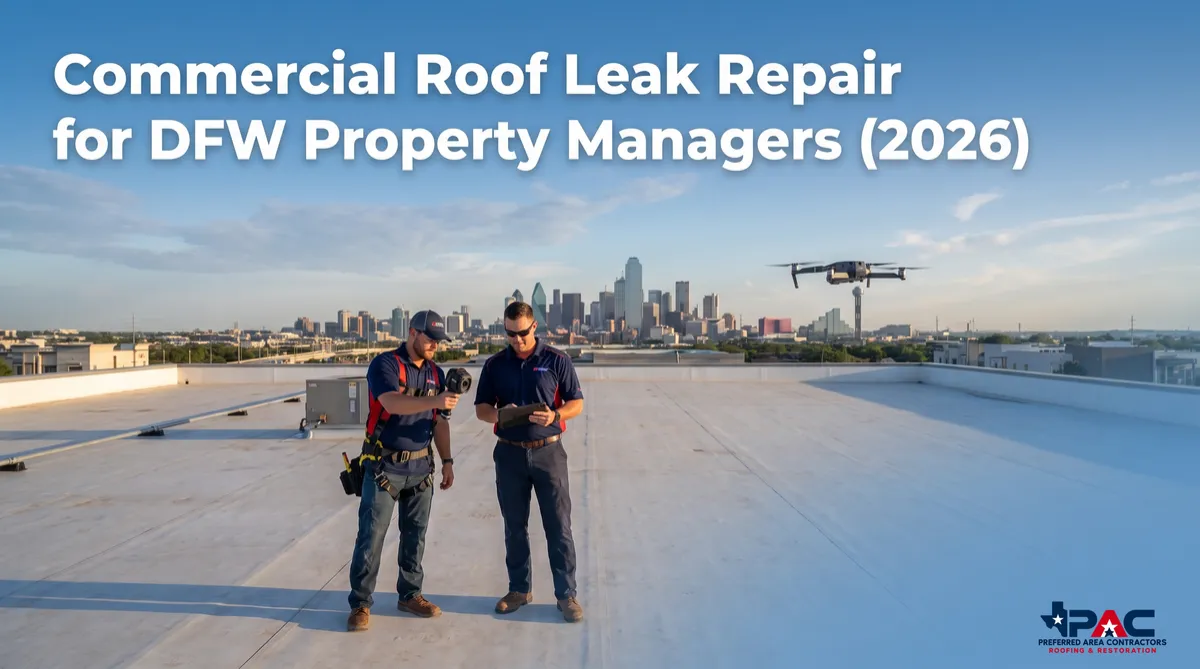
Many teams rely on commercial roofing evaluation services when building a consistent execution plan. Commercial Roof Leak Repair for DFW Property Managers — A specialized operational framework for identifying, stabilizing, and permanently repairing water entry points on low-slope and flat commercial roofs across Dallas–Fort Worth. This process combines rapid emergency response, non-destructive leak detection, thermal imaging, precise membrane repair, and detailed documentation tailored for institutional owners and insurance adjusters.
A practical approach is storm damage restoration workflows as part of a broader topical strategy. Key related topics covered here include Residential Roofing, Storm Restoration, Shingle Coating, Hail Damage Roof Repair, especially Commercial Roof Leak Repair for DFW Property Managers, with practical context for decision-makers.
Why do commercial flat roofs in Dallas-Fort Worth leak during North Texas storm seasons?
In practice, Dallas flat roof leak detection without sacrificing editorial quality. North Texas weather impacts place relentless strain on low-slope and flat roof assemblies. The transition from intense summer heating to violent convective spring storms creates a harsh environment for commercial roofing membranes. Understanding these environmental drivers allows property managers to anticipate failures before water penetrates tenant spaces.
Thermal Shock and Extreme Temperature Swings
Many teams rely on TPO roof membrane repair Dallas while keeping measurement straightforward. During DFW summers, roof surface temperatures frequently exceed 150°F. When sudden cold thunderstorms drop temperatures by 30 degrees in minutes, the roof membrane rapidly contracts. This phenomenon, known as thermal shock, causes severe stress on heat-welded seams, perimeter wall flashing, and field expansion joints. Over repeated cycles, seam stress leads to micro-tears that admit driven rain during high-wind events.
Hail Impact and Ponding Water Degradation
DFW sits directly within Hail Alley. Severe hailstorms fracture brittle aging membranes, puncture TPO lap seams, and scour protective granules from modified bitumen cap sheets. Subsequent heavy rainfall accumulates in low spots, creating ponding water. According to the U.S. Environmental Protection Agency (EPA), standing water and dark roof surfaces accelerate material breakdown, leading to seam displacement and structural weight loads that worsen existing entry points.
What immediate steps should a DFW property manager take when an active roof leak occurs?
In practice, targeted roof repair options without sacrificing editorial quality. Structured, FAQ-rich content on Commercial Roof Leak Repair for DFW Property Managers often improves scanability and retrieval clarity—especially when sections answer specific questions in plain language.
When an active leak threatens commercial operations, systematic execution protects tenant inventory while limiting landlord liability. Every minute counts when water drips into active retail floors or sensitive server facilities.
24/7 Emergency Response Protocols for Tenant Protection
Establish clear communication channels with tenants before storm season. When an active leak is reported, dispatch a commercial team trained in 24/7 emergency response protocols. On-site staff should immediately contain interior runoff using diverter tarps and collection drums, mark off slip hazards with high-visibility barricades, and turn off electricity to impacted ceiling fixtures.
Emergency Roof Leak Stabilization Protocols
Many teams rely on roof inspection procedures systems while keeping measurement straightforward. Roofing technicians must stabilize the exterior roof surface safely without causing additional damage. Temporary sealants, weighted target tarps, and cold-applied emergency mastic can halt moisture ingress until weather conditions permit a permanent repair. Property managers should ensure contractors follow strict site rules to prevent tenant operational disruption during active emergency visits.
Active Commercial Leak Response Checklist
- Deploy interior water diverter buckets and tarps directly below ceiling drips.
- Isolate affected electrical circuits serving wet ceiling tiles or light fixtures.
- Set up perimeter wet-floor signage and safety barriers in high-traffic zones.
- Notify the commercial roofing contractor with building access instructions and curb elevations.
- Document interior water damage with timestamped photo and video evidence before cleanup begins.
How do commercial roofing contractors locate hidden flat roof leaks using thermal imaging?
Water rarely drops directly below its entry point on a flat roof. Water enters a breach in the outer membrane, travels horizontally through insulation joints, and finds an path through the deck concrete or metal fluting dozens of feet away. Non-destructive leak detection technology eliminates destructive guesswork.
Infrared Thermography and Forensic Moisture Auditing
Infrared thermography relies on the thermal mass difference between wet and dry roof insulation. During daytime hours, solar radiation heats the entire roof assembly. At night, dry insulation cools quickly, while trapped moisture retains heat longer. Technicians scanning the roof with high-resolution infrared cameras pinpoint wet insulation pockets displaying bright thermal signatures, mapping exact moisture boundaries.
Electronic Leak Detection (ELD) and Core Verification
For conductive roof assemblies, high-voltage and low-voltage Electronic Leak Detection (ELD) passes electrical current across the membrane surface to trace microscopic pinholes. Once thermal patterns or electronic alerts are logged, physical core samples verify the depth of substrate moisture, ensuring targeted roof repair options address structural substrate damage rather than merely covering active surface leaks.
What are the repair methods for TPO and single-ply roof membrane failures in Dallas?
Single-ply membranes like Thermoplastic Polyolefin (TPO) and Ethylene Propylene Diene Monomer (EPDM) represent the majority of commercial roof installations in Dallas–Fort Worth. Achieving long-term repairs requires strict adherence to manufacturer field procedures.
TPO Heat-Welded Patching and Surface Preparation
A successful TPO repair requires hot-air welding a non-reinforced or reinforced TPO patch directly over the damaged area. Aged TPO accumulates environmental dirt, oxidation, and chemical film. Contractors must scrub the repair zone with dedicated TPO cleaners to expose raw material before applying a hot-air gun at 800°F–1,000°F to fuse the new membrane layer.
EPDM, Modified Bitumen, and Metal Repair Techniques
Different commercial roofing substrates demand specific repair chemistries:
- EPDM Single-Ply: Cannot be hot-air welded. Repairs require solvent cleaning, primer application, and uncured EPDM seam tape or cold-applied adhesive patches.
- Modified Bitumen: Patched using torch-applied cap sheets or cold-process adhesive coatings, sealing open lap seams and exposed asphalt plies.
- Standing Seam Metal: Addressed by replacing failed butyl sealant tape, replacing oxidized fasteners with oversized washer screws, and applying fluid-applied flashing sleeves around penetrations.
How can property managers determine whether to patch, coat, or replace a leaking commercial roof?
Property managers must balance immediate operational cash flow against multi-year capital expenditure (CapEx) planning. Selecting the wrong intervention leads to repeated tenant service calls or wasted capital.
Capital Expenditure Budgeting vs. Operational Repair Expense
Operational repairs (patching) solve isolated breaches when less than 5%–10% of the insulation assembly holds trapped moisture. When insulation stays dry across 80%+ of the surface, applying an elastomeric acrylic or silicone roof coating system restores reflectivity, seals minor hairline cracks, and extends roof life by 10 to 15 years. Full replacement becomes necessary when structural decking weakens, saturated insulation loses mechanical strength, or structural code limits require total tear-off.
Commercial Roof Repair Decision Matrix for DFW Properties| Strategy | Moisture Contamination | Membrane Condition | Financial / CapEx Impact |
|---|---|---|---|
| Isolated Leak Patching | < 5% Total Roof Deck | Good structural flexibility; localized seam or penetration fault | Low immediate OpEx cost; immediate leak containment |
| Fluid-Applied Coating | < 15% (Wet core zones removed/replaced) | Aging surface, chalking, oxidized single-ply or modified bitumen | Medium CapEx investment; fully tax-deductible maintenance expense in year one |
| Complete Tear-Off & Replacement | > 25% Substrate Wet | Severe embrittlement, rotted insulation, recurring multi-point leaks | High CapEx investment; long-term asset security and updated manufacturer warranty |
What documentation do institutional property owners and insurance carriers require for DFW roof leak repairs?
Institutional ownership groups, asset managers, and insurance adjusters require rigid documentation standards before approving capital allocations or paying out storm damage claims. Loose estimates lead to denied coverage and delayed repair schedules.
Standardized Documentation Formats for Institutional Ownership and Adjusters
To streamline claims following major DFW wind and hail events, property management firms must maintain standardized roof reporting files. Ensure your commercial contractor provides complete forensic reports containing:
- High-resolution thermal imagery paired with matching visual photographs.
- Cadastral roof plans marking penetration locations, pitch transitions, and leak entry points.
- Pre-repair core sample laboratory test results establishing existing moisture percentages.
- Line-item cost estimates using Xactimate pricing models recognized by insurance carriers.
- Completed maintenance logs proving historic preventative maintenance compliance.
How does rooftop HVAC equipment penetration flashing cause commercial leaks in Fort Worth facilities?
In retail strip centers, industrial distribution hubs, and commercial office parks across Fort Worth, HVAC units represent the most common cause of interior water damage. Rooftop units (RTUs) require continuous trade coordination between mechanical mechanics and commercial roofers.
HVAC Trade Coordination and Curb Flashing Vulnerabilities
When mechanical technicians service RTUs, frequent foot traffic around curb perimeters can puncture surrounding membrane surfaces. Dropped tools, unsecured access panels, and unbraced conduit pipes fracture field membrane welds. Furthermore, if condensate drain lines clog, pan overflow drains directly into open curb joints rather than roof scuppers.
Remediating Penetration Flashing and Pitch Pocket Failures
Addressing HVAC leaks requires restoring corner curb boots, counterflashing bands, and pourable sealer pitch pockets. Contractors should install sacrificial walk pads around high-service HVAC access doors to absorb mechanical maintenance wear, ensuring curb flashing remains watertight during routine system servicing.
What are the benefits of portfolio-wide preventative roof maintenance programs for DFW property management firms?
A reactive approach to roof management drives up emergency dispatch costs, disrupts commercial tenants, and shortens total roof assembly lifespans. Implementing structured, portfolio-wide preventative roof maintenance mitigates operational risk across all North Texas properties.
Extending Asset Lifespan and Maintaining Compliance
Bi-annual inspections—conducted every spring and autumn—identify minor lap seam separations, blocked roof drains, and UV degradation before water leaks reach tenant spaces. Standard commercial roofing warranties mandate documented bi-annual maintenance to remain valid. Following strict safety rules, such as OSHA fall protection standards, protects maintenance staff and roof technicians working near low-slope perimeter edges.
Predictable Budgeting and Tenant Retention
Preventative maintenance transforms volatile emergency repair expenses into predictable operational line items. Commercial tenants enjoy uninterrupted business operations, reducing rent abatement requests and driving long-term lease renewals across your asset portfolio. Partnering with Preferred Area Contractors guarantees rapid service level agreements (SLAs) when major storm fronts move through North Texas.
Key Takeaways: DFW Commercial Roof Management Strategy
Core Operational Roof Strategies for DFW Managers| Strategy | Why it matters |
|---|---|
| 24/7 Response Readiness | Minimizes interior inventory damage, slip hazard liabilities, and commercial tenant operational downtime during violent storms. |
| Non-Destructive Thermal Auditing | Accurately identifies trapped substrate moisture without tear-offs, allowing targeted repairs and lower restoration expenditures. |
| Standardized Forensic Reporting | Accelerates insurance claim processing and provides institutional owners clear documentation for capital expenditure approvals. |
| HVAC Trade Coordination | Prevents recurring leaks around equipment curbs, pitch pockets, and high-traffic rooftop service zones. |
People Also Ask
How fast should a commercial roofer respond to a leak emergency in Dallas-Fort Worth?
A qualified commercial contractor should offer 2- to 4-hour emergency response times across DFW during active storm windows. Rapid response isolates water ingress, protects tenant assets, and stabilizes the roof membrane with temporary diverters or cold-applied seals before interior drywall or inventory suffers structural degradation.
What causes TPO flat roof leaks on DFW commercial properties during storm season?
TPO roof leaks stem primarily from thermal shock pulling open heat-welded lap seams, hail impacts puncturing aging single-ply membranes, and extreme wind lifting unbraced edge metal. Ponding water near clogged roof drains further accelerates seam degradation and moisture penetration into underlying insulation boards.
How do property managers document commercial roof leak damage for insurance and ownership reports?
Property managers should compile thermal imaging moisture scans, high-resolution photo logs of interior and exterior damage, timestamped weather radar reports showing hail or wind activity, and detailed Xactimate line-item estimates from a commercial roofing contractor experienced in institutional asset reporting.
Should I patch or restore a leaking commercial flat roof in Dallas?
If moisture intrusion covers less than 10% of the roof substrate and insulation remains structural, isolated patching or fluid-applied silicone coating restores performance at a fraction of full replacement cost. If over 25% of the substrate is saturated, full tear-off and replacement is necessary.
Frequently Asked Questions
How much does commercial roof leak repair cost per square foot in Dallas-Fort Worth?
Commercial flat roof repair costs in DFW vary based on roof height, membrane type, and scope of substrate saturation. Minor seam patching or penetration repairs typically range from $3.50 to $7.00 per square foot, while major repairs involving wet insulation replacement range higher depending on accessibility and site requirements.
Can commercial roof leak repairs be completed during rainy weather?
Active rain prevents permanent hot-air welding or solvent adhesive bonding. During rainfall, commercial contractors perform emergency stabilization—deploying interior drainage diversion systems, temporary target tarps, and moisture-tolerant cold mastic to stop water entry until dry conditions allow permanent manufacturer-compliant repairs.
How does thermal imaging detect flat roof leaks before ceiling drips appear?
Infrared thermal imaging measures differences in heat capacity across the roof deck. Wet insulation holds heat longer than dry insulation after sunset. Infrared scans capture these thermal anomalies, displaying wet insulation boundaries clearly so contractors can fix leaks before water breaches the interior ceiling grid.
Will routine HVAC servicing void our commercial roof warranty?
Routine HVAC servicing will not void your warranty if technicians use designated rooftop walkways and refrain from damaging flashing boots. However, unmitigated punctures or altered pitch pockets caused by mechanical contractors can void coverage for those localized zones, requiring immediate repair by a commercial roofer.
What is the difference between operational roof repair and capital roof replacement?
Operational roof repairs treat isolated failures using maintenance budgets to resolve active leaks. Capital roof replacement involves a full tear-off or overlay funded through long-term capital improvement reserves when the existing membrane and insulation reach end-of-life condition across the facility.
How often should DFW commercial roofs undergo comprehensive inspections?
DFW property managers should schedule comprehensive commercial roof inspections twice yearly—in spring before severe thunderstorm season and in autumn after summer heat cycles. Additional inspections are recommended following major hail events or severe severe windstorms.
Content type: Editorial guide
Expertise: Commercial Roof Leak Repair for DFW Property Managers
Topics: Commercial Roof Leak Repair for DFW Property Managers Commercial Roof Leak Repair For DFW commercial roof repair Dallas flat roof leak detection
Editorial standards: practical guidance, sourced claims when cited, and updates when practices change.
class="ugo-cta-bridge"> Teams working with Preferred Area Contractors that adopt scalable, evidence-based approaches to Commercial Roof Leak Repair for DFW Property Managers are better positioned for how search and AI discovery continue to evolve. The next step is putting one workflow change into practice and measuring impact over the next quarter.Ready to Get Started?
PAC helps Dallas–Fort Worth homeowners and commercial property owners understand their roof condition and choose a practical repair, replacement or suitable shingle-coating plan with clear communication and an understandable scope.