
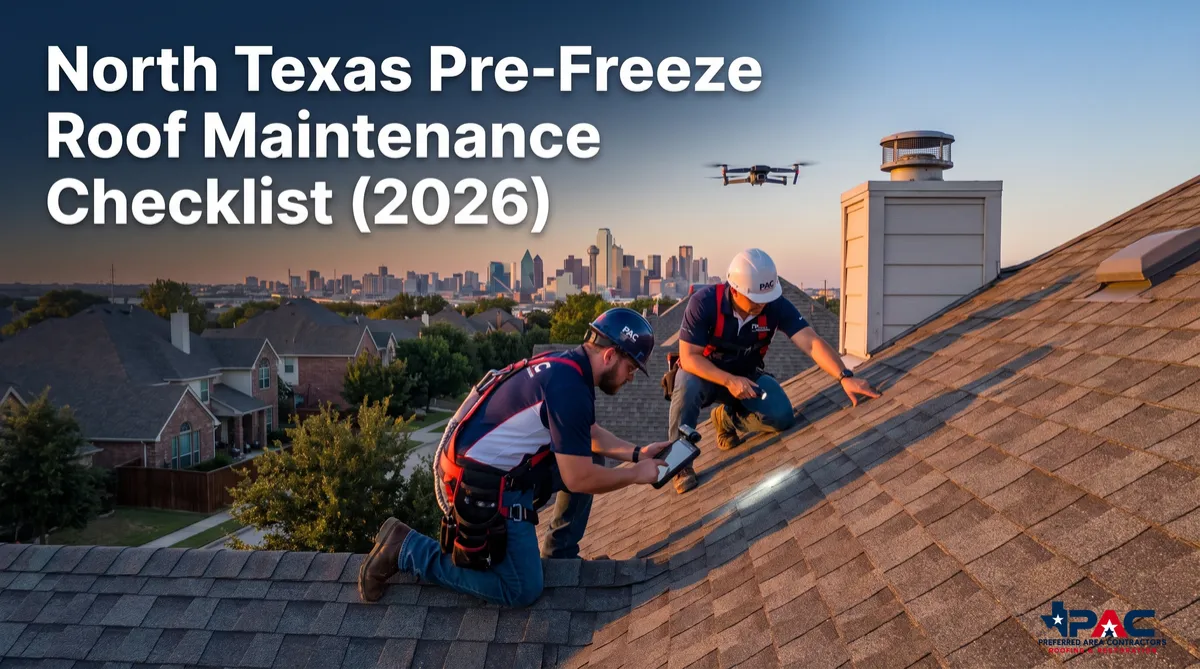
North Texas Pre-Freeze Roof Maintenance Checklist (2026)
Winter weather across the Dallas–Fort Worth metroplex presents a unique threat to residential and commercial roofing systems. While North Texas winters rarely feature months of continuous snow, sudden hard freezes, winter ice storms, and rapid temperature swings can cause severe structural damage to an unprepared roof. Following a dedicated North Texas Pre-Freeze Roof Maintenance Checklist during late autumn is the most effective way to protect your home, extend roof lifespan, and prevent costly winter water leaks.
North Texas Pre-Freeze Roof Maintenance is a seasonal preventive workflow designed to identify vulnerable roof components before winter freeze events occur. Key steps include clearing leaf debris from gutters, inspecting flashing and pipe boots, trimming overhanging branches, checking attic ventilation, and securing loose asphalt shingles before thermal contraction exposes micro-gaps to water infiltration.
Key related topics covered here include Roof Replacement, Hail Damage Roof Repair, especially North Texas Pre-Freeze Roof Maintenance Checklist, with practical context for decision-makers.
1. Why is pre-freeze roof maintenance critical for North Texas homes?
Many homeowners associate roof damage strictly with spring hail storms and summer heat. However, the transitional period between autumn and early winter in North Texas creates extreme atmospheric stress on roofing materials. Climatological data from the National Weather Service indicates that the average date for the first freeze in the DFW area falls around November 22, with historical freeze events striking as early as late October.
Preparing your roof during late October through mid-November ensures that all vulnerable penetration seals, gutter systems, and shingle courses are stabilized before freezing conditions set in. Waiting until after a freeze occurs introduces severe repair complications, as standard cold weather prevents asphalt adhesive strips from properly bonding without manual intervention.
The Hidden Cost of Delayed Winter Maintenance
Ignoring pre-freeze maintenance frequently leads to hidden water intrusion. When late-autumn rains pool behind clogged drainage channels or seep under cracked flashing, subsequent freezing temperatures turn that trapped water into expanding ice. This mechanical expansion opens hidden seams inside your building envelope long before interior ceiling stains reveal the damage.
Scheduling proactive roof care before cold weather arrives allows property owners to utilize standard sealants and adhesives while daytime ambient temperatures remain high enough for proper chemical bonding and curing.
2. How do drastic DFW temperature swings damage roof sealants and shingles?
Structured, FAQ-rich content on North Texas Pre-Freeze Roof Maintenance Checklist often improves scanability and retrieval clarity—especially when sections answer specific questions in plain language.
North Texas is famous for volatility in its daily weather patterns. It is common for the Dallas–Fort Worth metroplex to experience a warm 75°F afternoon followed by a sharp cold front that plunges temperatures down into the 30s overnight. This 30-to-40 degree single-day temperature swing subjects asphalt shingles, metal flashings, and elastomer caulks to severe thermal shock.
Thermal shock causes rapid thermal expansion during afternoon sun exposure and aggressive contraction after nightfall. Over time, repeated thermal cycling forces roofing materials to expand and shrink at different rates, splitting brittle sealants and pulling exposed fasteners loose.
Thermal Shock and Asphalt Shingle Adhesive Failure
Every standard architectural asphalt shingle relies on a factory-applied thermal sealant strip running along its lower edge. During warm weather, solar energy heats this strip, causing it to bond firmly to the underlying shingle course. However, winter cold weather stiffens asphalt, making it brittle and vulnerable to shear stress caused by daily expansion and contraction.
When sudden freezing temperatures strike before maintenance is complete, micro-cracks in aging sealants split apart. Strong winter north winds can then easily catch the unbonded shingle edges, lifting them up and creating direct pathways for driving rain or sleet.
Thermal Impact on Common North Texas Roofing Materials| Material Type | Warm Weather Behavior | Freezing Reaction | Primary Failure Risk |
|---|---|---|---|
| Asphalt Shingles | Pliable, self-sealing adhesive strip | Stiff, brittle, adhesive bond shrinks | Wind uplift and tab cracking |
| Neoprene Pipe Boots | Flexible elastomeric seal around vent pipe | Hardens, cracks under thermal contraction | Direct collar leaks into ceiling attic |
| Metal Flashing | Expands along roof joints and valleys | Contracts sharply away from masonry/wood | Caulk joint separation and seam exposure |
3. How to properly clear gutters and downspouts before the first Texas freeze?
North Texas tree canopies—especially oak, pecan, and sweetgum trees—drop heavy leaf loads from late October through mid-November. If these leaves, twigs, and organic debris are left inside your gutter troughs, they form dense clogs that trap late-fall rainwater.
When an arctic cold front sweeps through DFW, trapped water in clogged gutters freezes solid. Because ice expands by approximately 9% in volume, frozen gutter troughs experience intense outward pressure, loosening heavy mounting brackets, tearing downspouts away from fascia boards, and backing standing ice under the lower edge of your roof deck.
Step-by-Step Gutter Freeze Prevention Process
Clearing your gutter drainage system requires a methodical approach to ensure free water flow before the first sub-freezing night arrives:
- Manual Debris Extraction: Remove thick organic matter using a plastic gutter scoop or soft gloved hands. Avoid sharp metal tools that scrape off protective interior metal coatings.
- Flush Downspout Lines: Run a garden hose at high pressure from the top gutter opening down through the elbow drops to clear unseen debris dams.
- Verify Downspout Extensions: Ensure downspout splash blocks or flexible underground extension tubes discharge water at least 4 to 6 feet away from your home's foundation to prevent ice hazard formation on walkways.
- Inspect Gutter Slope: Confirm gutters maintain a gradual downward pitch (approximately 1/4 inch of drop per 10 feet of run) toward downspouts so no standing pools remain to freeze.
4. How do you inspect asphalt shingles for damage before winter weather arrives?
A thorough shingle inspection before winter weather arrives helps homeowners catch minor wear before freezing moisture transforms small cracks into major emergency repairs. Prior hail impacts from spring storms often loosen protective ceramic granules, leaving raw asphalt substrate exposed to UV light and cold-weather cracking.
While visual ground-level checks with binoculars provide a safe starting point, professional technicians evaluate shingle integrity using systematically structured safety protocols and precision field checks.
Key Shingle Defect Indicators to Identify
When evaluating your shingle condition ahead of a hard freeze, look closely for these specific warning signs:
- Granule Loss in Valleys: Heavy accumulation of dark, sand-like granules in gutter troughs indicates advanced shingle weathering and reduced impact resistance.
- Creased or Uplifted Tabs: Shingles showing horizontal creasing lines across their middle section have lost their thermal adhesive seal and suffered wind stress.
- Curling and Cupping Edges: Shingle edges curling upward indicate age-related binder loss, leaving the shingle vulnerable to snapping under ice weight.
- Exposed Nail Heads: Unsealed roof fasteners ("back-backed nails") allow water to track directly down the shank into decking timber during thaw cycles.
If your home has suffered prior hail hits, arranging comprehensive roof inspections before freezing conditions set in can identify hidden fractures that qualify for insurance-backed repairs before cold weather compromises the roof deck.
5. Where to check roof flashing and pipe boots for cold-weather leak risks?
Roof penetrations—including plumbing stack vents, attic exhaust flues, skylights, and chimney flashing—account for over 80% of winter roof leaks in North Texas. The critical vulnerability at these sites is the interface between rigid building components and flexible elastomeric sealants.
Standard rubber pipe boot collars undergo severe UV deterioration under intense Texas sun exposure during summer. When winter cold arrives, the degraded neoprene hardens and splits open along the pipe seam under thermal contraction, creating an unsealed path for freezing rain.
Critical Penetration Inspection Areas
Ensure your pre-freeze evaluation thoroughly examines these key penetration zones:
- Neoprene Plumbing Pipe Boots: Check for dry rot, radial splits, or torn rubber collars encircling PVC vent pipes protruding through the roof plane.
- Step and Counter Flashing at Chimneys: Inspect mortar joints and metal counter-flashing along brick chimneys to verify continuous elastomeric caulking without gaps.
- Roof Valley Metals: Confirm valley flashings are free of rust spots, leaf buildup, and buckled metal edges that trap sleet and slush.
- Wall Step Flashing: Verify flashing along dormer sidewalls remains fully tucked beneath siding materials and properly sealed at roof intersections.
6. How far should homeowners trim tree limbs away from the roofline before winter?
North Texas frequently experiences severe winter ice storms that coat tree canopies in thick layers of heavy ice. Just a quarter-inch of ice accumulation adds hundreds of pounds of extra weight to mature oak and pine branches, causing overhanging limbs to sag dramatically or break off completely.
Tree branches hanging close to your home also scrape off asphalt shingle granules when blown by strong winter north winds, physically grinding away protective outer surfaces.
Recommended Tree Clearance Guidelines
To keep your roof safe during DFW winter weather, adhere to these professional clearance standards:
- Vertical and Horizontal Clearance: Trim all tree branches back to maintain a minimum safety radius of 6 to 10 feet away from all roof slopes and gables.
- Deadwood Removal: Cut away dead, diseased, or decaying limbs throughout the canopy above your home, regardless of distance, as ice weight will force them down.
- Low-Hanging Shade Canopy: Prune dense foliage hanging directly over roof valleys to allow direct sunlight to hit roof surfaces, accelerating frost and ice melting after freezes.
Addressing overhanging branches protects structural decking and keeps leaves from filling recently cleaned gutter channels before winter storm fronts hit.
7. How does proper attic insulation and ventilation prevent roof ice dams in DFW?
Although ice dams are commonly associated with northern states, North Texas homes frequently experience ice damming during extended winter freeze events such as Winter Storm Uri or major DFW sleet events. An ice dam forms when attic heat escapes through the roof deck, melting snow or ice on upper roof slopes.
The melted water runs down under the snow cover until it reaches the cold unheated eaves or gutter line, where it refreezes into a thick ice ridge. Subsequent meltwater backs up behind this ice dam, forcing standing water upward under asphalt shingles and directly into interior ceilings.
Balancing Attic Thermal Barriers and Airflow
Preventing winter ice dams requires maintaining a balanced attic temperature that matches exterior ambient air temperatures as closely as possible. According to energy efficiency standards published by Energy.gov, proper attic air sealing combined with continuous ventilation stops thermal loss through roof decks.
- Soffit Vent Clearance: Ensure insulation batts or blown cellulose do not block soffit intake vents. Use plastic rafter baffles to maintain continuous airflow from eaves up to ridge vents.
- Attic Insulation Depth: Ensure your attic floor maintains recommended thermal insulation depth (R-38 to R-60 in Zone 3/4) to trap household heat inside lived-in spaces.
- Exhaust Fan Ducting: Confirm bathroom and kitchen exhaust ducts vent entirely outside through roof caps rather than terminating inside attic spaces where moist warm air creates frost buildup beneath decking boards.
Property owners dealing with complex thermal issues or older insulation setups can explore modern residential roofing services or protective shingle coating application options to reduce deck heat transfer and protect asphalt layers.
8. When should North Texas homeowners hire a professional roof inspector before winter?
While homeowners can complete ground-level visual checks and basic gutter cleaning safely, climbing onto steep or multi-story roof planes during cool, damp weather carries significant safety risks. Frost, algae film, and morning dew make winter roof surfaces exceptionally slick.
Partnering with a trusted local roofing contractor ensures your property receives a thorough evaluation using proper safety harnesses, specialized gear, and trained diagnostic eyes before cold weather arrives.
When to Call a Professional DFW Roofer
Consider scheduling a professional pre-freeze roof check if your property displays any of the following conditions:
- Your roof is over 12 to 15 years old and has not been inspected following recent severe spring weather.
- You notice water staining, damp insulation, or active leaks inside attic spaces following heavy autumn rain.
- Your home features steep roof pitches, multi-level dormers, or complex tile/metal structural details.
- You suspect recent hail or high-wind damage from severe North Texas storm systems.
Promptly addressing minor repairs before freezing temperatures set in ensures high-quality work, proper sealant adhesion, and complete peace of mind throughout the winter season.
North Texas Pre-Freeze Roof Maintenance Checklist Summary
Use this quick step-by-step checklist to track your property's winter preparation progress before the first DFW freeze:
- [ ] Clean Gutters & Downspouts: Clear all leaf litter and flush downspouts by early to mid-November.
- [ ] Inspect Pipe Boots: Replace torn or cracked neoprene vent collars to stop pipe leaks.
- [ ] Check Shingle Tabs: Identify lifted, creased, or missing asphalt shingles before winter north winds hit.
- [ ] Examine Penetration Sealants: Reseal chimney counter-flashing and wall flashings with high-grade elastomeric sealant.
- [ ] Trim Overhanging Branches: Prune trees back 6 to 10 feet from rooflines to prevent ice-weight branch breaks.
- [ ] Verify Attic Airflow: Ensure soffit intake vents are unblocked by insulation and attic ventilation is balanced.
- [ ] Schedule Professional Assessment: Contact an experienced North Texas roofer if steep pitches or unsealed leaks exist.
Key Winter Maintenance Strategies & Benefits
Pre-Freeze Roof Maintenance Strategy Matrix| Strategy | Why It Matters in North Texas |
|---|---|
| Autumn Gutter Clearance | Prevents heavy ice formation, gutter tearing, and lower roof deck water backing up during hard freezes. |
| Pre-Freeze Pipe Boot Replacement | Stops water intrusion through split rubber collars caused by rapid cold-weather material contraction. |
| Tree Canopy Pruning (6–10 ft) | Eliminates branch scraping and shields structural roof decking from heavy ice-laden limb collapse. |
| Attic Vent Unblocking | Balances attic thermal levels, prevents interior condensation, and stops winter ice dam formation. |
People Also Ask
How do I prepare my roof for a North Texas freeze?
Prepare your roof by clearing leaves from gutters and downspouts, inspecting neoprene pipe boots for cracks, re-sealing loose flashing, trimming tree branches 6 to 10 feet away from shingles, and ensuring soffit vents remain clear to prevent attic heat buildup and ice dams.
When should I clean my gutters before the first freeze in Dallas Fort Worth?
The ideal window for cleaning gutters in DFW is late October through mid-November. This ensures you catch the heavy fall leaf drop from local oak and pecan trees while completing maintenance before the historical average first freeze date of November 22.
What roof maintenance is needed before winter in DFW?
Essential DFW winter roof maintenance includes replacing brittle pipe boot collars, securing loose asphalt shingle tabs, clearing drainage channels, verifying attic ventilation efficiency, and fixing minor leaks before thermal shock causes micro-cracks to expand.
How does thermal shock damage asphalt shingle roofs in North Texas?
Thermal shock occurs when rapid single-day temperature changes (often 30°F to 40°F drops) cause asphalt shingles and metal flashings to rapidly expand and contract. This mechanical movement splits aged caulking, breaks shingle thermal adhesive bonds, and pulls fasteners loose.
Frequently Asked Questions
Can you repair or seal asphalt shingles during freezing winter weather?
While emergency repairs can be performed during winter, standard asphalt shingle self-sealing adhesive strips require warm solar heat (above 40°F to 50°F) to activate naturally. Repairs completed during hard freezes require hand-tabbing with specialized cold-weather roofing cement to keep shingles secure until spring warm weather arrives.
Why is water leaking near my plumbing vent pipe during winter rains?
Water leaking near plumbing stack vents is typically caused by a failed rubber pipe boot collar. UV exposure dries out neoprene during summer heat, and winter cold causes the rubber to contract and split, allowing water to flow directly along the vent pipe into your ceiling.
What causes ice dams on Dallas-Fort Worth homes?
Ice dams form when attic heat escapes through uninsulated ceiling spaces into the roof deck. This melts accumulated sleet or snow on upper roof sections. The meltwater runs down to the unheated eaves or gutter line, where it refreezes into ice that traps backing water under shingles.
Is a roof inspection necessary if my roof is only a few years old?
Yes. Even newer roofs in North Texas suffer wear from intense summer heat, spring hail events, and tree debris. A quick pre-freeze inspection ensures penetration sealants have not dried out or shifted prior to winter weather.
How far back should tree limbs be trimmed from my roof?
Tree limbs should be pruned back at least 6 to 10 feet from all roof surfaces. This clearance prevents branches from scraping off asphalt granules during windy north fronts and eliminates limb breakage risks during heavy ice storms.
What type of sealant should be used for pre-freeze roof flashing repairs?
High-grade polyurethane or modified asphalt elastomeric roofing cements should be used for rooftop flashing repairs. Avoid standard silicone sealants, which struggle to adhere to asphalt surfaces and fail under extreme thermal expansion cycles.
Can clogged gutters damage my home's foundation during winter?
Yes. Clogged gutters overflow during fall rains and winter thaws, dumping heavy water along your home's foundation line. In freezing conditions, frozen ground water expands, increasing soil pressure and risking foundation cracks or sidewalk heave.
What should I do if I discover storm or hail damage during winter maintenance?
If you discover broken tiles, missing shingles, or hail fractures during pre-freeze checks, consult with qualified professionals specializing in storm restoration solutions or targeted roof leak repair to restore structural protection before heavy cold weather sets in.
Content type: Editorial guide
Expertise: North Texas Pre-Freeze Roof Maintenance Checklist
Topics: North Texas Pre-Freeze Roof Maintenance Checklist North Texas Pre-Freeze Roof Maintenance DFW winter roof preparation pre-freeze roof inspection Dallas Fort Worth
Editorial standards: practical guidance, sourced claims when cited, and updates when practices change.
class="ugo-cta-bridge"> Teams working with Preferred Area Contractors that adopt scalable, evidence-based approaches to North Texas Pre-Freeze Roof Maintenance Checklist are better positioned for how search and AI discovery continue to evolve. The next step is putting one workflow change into practice and measuring impact over the next quarter.Ready to Get Started?
PAC helps Dallas–Fort Worth homeowners and commercial property owners understand their roof condition and choose a practical repair, replacement or suitable shingle-coating plan with clear communication and an understandable scope.