
How to Choose Roofers in Dallas, Texas: Questions to Ask
To choose roofers in Dallas, Texas, verify the business and its current insurance, compare written scopes rather than price alone, confirm permit responsibilities, and get payment and warranty terms in writing. If a storm is involved, keep the roofing assessment separate from your insurer’s coverage decision. A careful comparison helps you understand what your home needs before you commit.
This guide from Preferred Area Contractors (PAC) explains the questions to ask about a repair, replacement, or storm-damage project in Dallas–Fort Worth. Start with the checklist below, then use the details to compare proposals on the same basis.
A quick checklist before hiring a Dallas roofer
Confirm the legal business name, service area, reliable contact information, and who will manage your project.
Request current liability-insurance documentation and ask how worker injuries and subcontractors are covered.
Ask for photos and an explanation of the roof condition behind the recommendation.
Compare material specifications, flashing, ventilation, decking allowances, cleanup, and exclusions.
Confirm permits, required inspections, payment milestones, and the process for approving changes.
Read the workmanship and manufacturer warranty terms separately.
For an insurance-funded project, understand your deductible and avoid promises of guaranteed claim approval.
1. Verify the contractor before approving work
A familiar logo or a polished website is a starting point, not proof of qualifications. Make sure the company named on your estimate matches the company on your contract and insurance documentation. Ask who your contact will be during installation and after the job is complete.
Ask for current insurance documentation
Request evidence of general liability insurance, including the named business and policy dates. Ask the insurance agent or carrier to confirm the information when needed. Also ask how the company addresses injuries involving employees and subcontractors; do not assume that a liability policy and worker-injury coverage are the same thing. A clear answer is more useful than the phrase “fully insured.”
Check certifications and references independently
If a roofer advertises a manufacturer certification, verify the current business listing directly with that manufacturer. For example, the GAF residential contractor directory includes contractor verification. Ask which specific warranty the proposed roof system qualifies for and what registration is required. A certification badge does not mean every product or installation receives the same coverage.
Read reviews for useful details: communication, property protection, cleanup, and follow-through. Ask for relevant references and permission to contact them. A service-area business may not have a customer-facing showroom, so verify its actual business contact information and accountability rather than relying on storefront appearance alone.
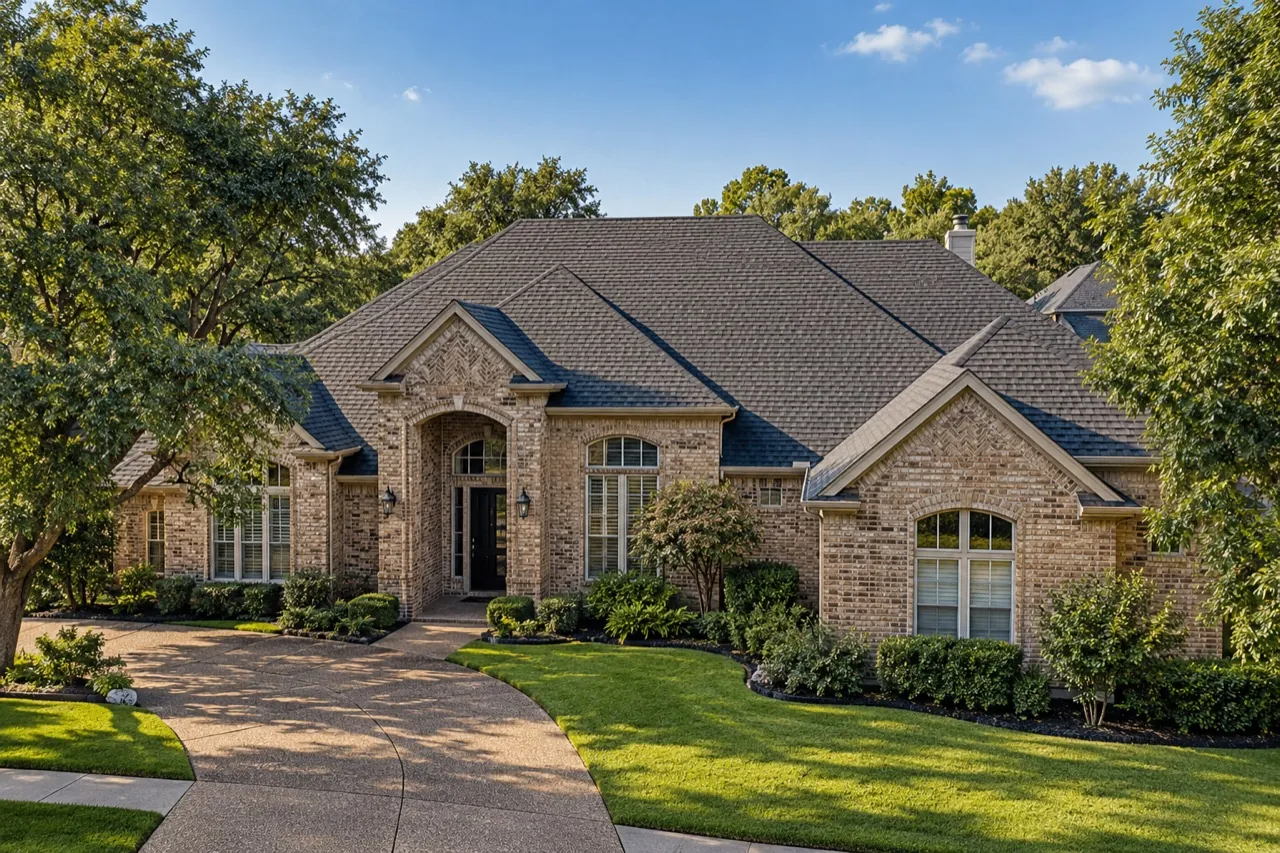
Roofing illustration showing the type of residential roof discussed in this guide.
2. Ask why repair or replacement is recommended
A useful assessment explains the problem, its location, and the options. Ask the contractor to distinguish observed damage from suspected causes, and to explain what cannot be confirmed until materials are removed. Photos help you compare recommendations without climbing onto the roof yourself.
Localized issues may call for roof repair, while broader deterioration or damage may require roof replacement. An active leak deserves attention, but a ceiling stain alone does not establish that the entire roof needs replacing. Ask how the proposed work addresses the source of the problem.
For a closer comparison, read our DFW homeowner’s guide to repair versus replacement. You can also request a roof assessment to discuss the condition and appropriate next steps.
Is shingle coating an alternative?
For some roofs, shingle coating may be worth evaluating as a maintenance option. Suitability depends on the existing roof, material compatibility, condition, and the coating’s application requirements. It does not replace damaged decking, correct structural problems, or make every leaking or storm-damaged roof suitable for continued use. Ask for a written explanation of why coating, repair, or replacement is appropriate for your roof.
3. Compare written estimates on the same scope
The lowest total is not necessarily the lowest cost for the same work. One bid may include new flashing and ventilation changes while another excludes them. Before comparing totals, ask each roofer to identify the materials, quantities, labor, and exclusions in writing.
What should a roof replacement estimate include?
Roof measurements: roof surface area, pitch, and the portions included in the project.
Removal and disposal: layers to be removed, debris handling, and property protection.
Roof-system materials: specific shingle or other material, underlayment, starter and ridge components, and applicable installation requirements.
Flashing and penetrations: the treatment of valleys, walls, chimneys, vents, and other transitions.
Decking: what is included and how additional damaged decking will be priced and approved.
Ventilation: the proposed approach and any changes included in the scope.
Permits and inspections: responsibility, fees, and closeout documentation where required.
Completion: cleanup, walkthrough, warranty documents, and remaining exclusions.
Why roof prices vary in Dallas–Fort Worth
Roof surface area is different from the home’s interior square footage. Pitch, roof shape, access, material selection, existing layers, decking condition, and flashing requirements can change the amount of work. Hidden damage can also affect the final scope. A price range based only on home size may leave out important details.
Ask for an assessed, written estimate rather than treating a generic online price as a quote. If one proposal is substantially cheaper, ask which materials or tasks differ. If upgrades are optional, request separate prices so you can make an informed choice. For impact-resistant materials, ask your insurer whether the specific product qualifies for a discount; do not assume an upgrade guarantees lower premiums or protection from all hail damage.
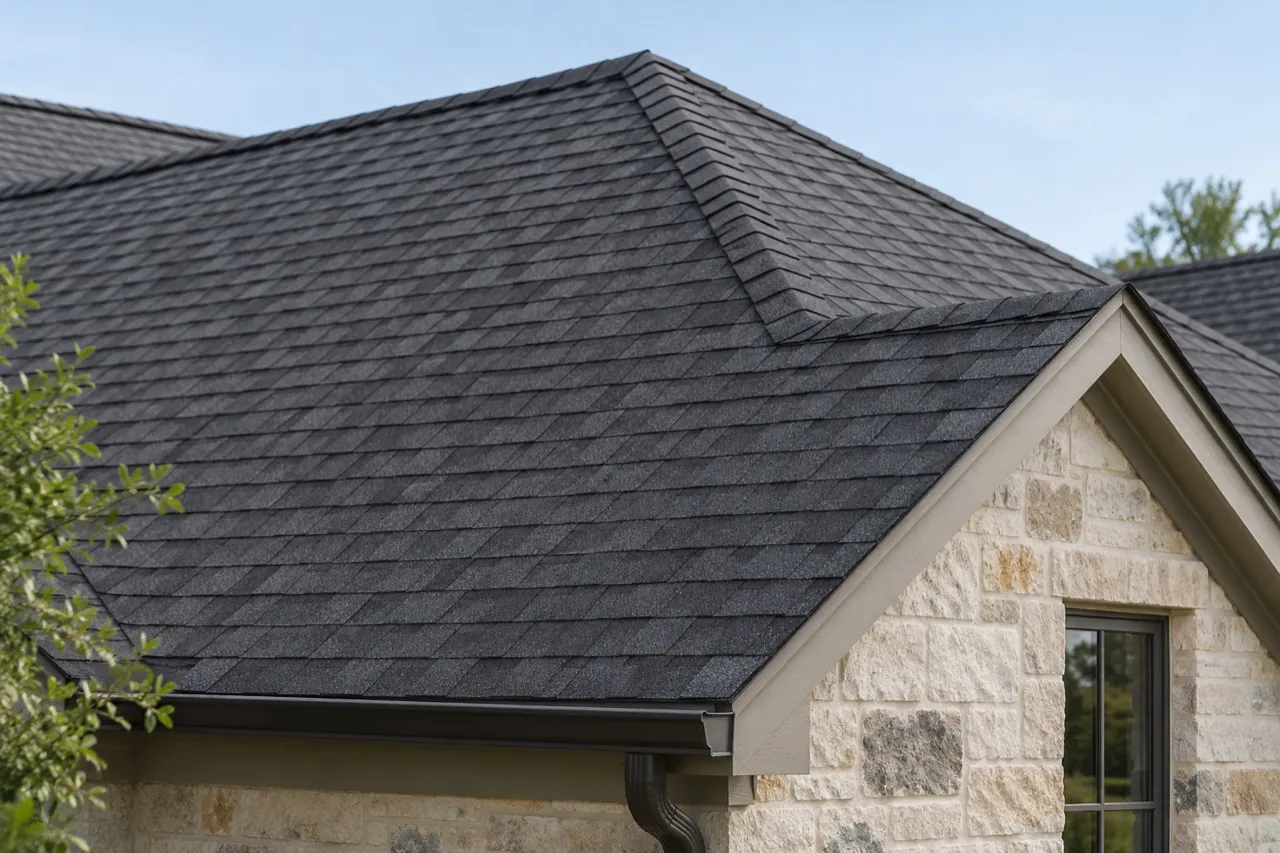
Roof-system illustration. Ask your contractor to identify the actual materials proposed for your property.
4. Confirm permits, warranties, and payment terms
Who handles the roofing permit?
Confirm the rules for the city or jurisdiction where the property is located. Dallas’s single-family recovery guidance states that replacing large areas of a roof or an entire roof requires a re-roof permit. Ask the contractor to confirm the current requirements for your exact scope, identify who will obtain any required permit, and explain which inspections and closeout records are included. Requirements in another DFW city may differ.
What does each warranty cover?
Ask for the actual warranty documents. Material and workmanship coverage can have different issuers, terms, exclusions, registration requirements, and remedies. Confirm the coverage period, who handles a claim, whether transfer is allowed, and which maintenance or alterations may affect coverage. Keep your contract, product information, photos, receipts, and warranty registration together.
How are payments and changes approved?
Agree on a written payment schedule tied to clearly defined milestones. Understand any deposit, cancellation terms, financing agreement, and final-payment conditions before signing. Ask how unexpected decking or other hidden damage will be documented and priced. Changes should be approved in writing so the final invoice does not depend on a conversation you remember differently.
Request an estimated start date and duration, along with the factors that could change them: weather, material availability, roof complexity, permits, and storm demand. A clear scheduling explanation is more useful than an unsupported promise that every roof will be finished in a fixed number of days.
5. Know the boundaries when insurance is involved
Roofing work and insurance coverage are separate decisions. A contractor can document roof conditions and explain its construction estimate. Your insurer determines coverage under your policy; a contractor should not promise a specific settlement.
The Texas Department of Insurance explains that a contractor providing work on a property cannot also act as a public insurance adjuster on that claim. PAC’s roofing assessment and construction scope do not guarantee claim approval or a particular insurance payment.
Texas also prohibits contractors from offering to waive, rebate, or absorb a property insurance deductible. Review TDI’s deductible guidance before signing an insurance-funded contract. Keep payment documentation and direct coverage questions to your insurer or an appropriately licensed professional.
For the broader process, see our guide to roof insurance claims after hail in DFW. This article provides general planning information; your policy and project circumstances determine the details.
6. Respond safely after a storm or active leak
Take photos from ground level and document interior damage when it is safe. Stay off a wet or damaged roof, keep away from electrical hazards, and arrange professional help for urgent protective work. Save receipts and notify your insurer according to your policy’s reporting requirements. Temporary protection does not establish coverage, and permanent repairs should follow an appropriate assessment.
PAC offers storm-restoration services and roof-leak repair across Dallas–Fort Worth. Emergency and storm service is available 24 hours a day, seven days a week; arrival timing depends on conditions and availability.
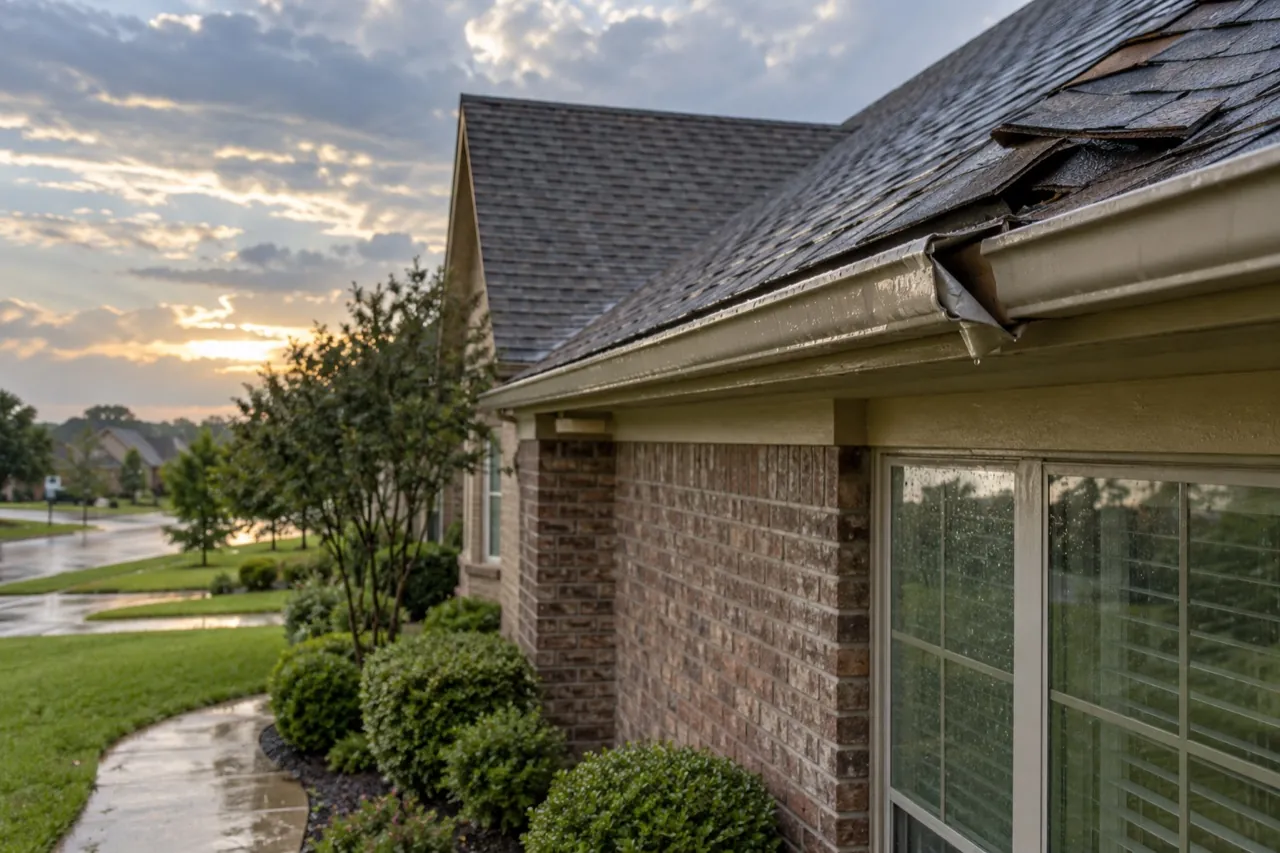
Roof-edge illustration. An assessment should consider transitions and drainage as well as the shingle surface.
Frequently asked questions about hiring Dallas roofers
Should I get more than one roofing estimate?
Comparing more than one written estimate can help you understand the recommended work. Compare the same materials, tasks, exclusions, warranties, and payment terms. Different totals may reflect different scopes rather than a simple difference in price.
Can a roofer tell me whether insurance will pay?
A roofer can describe observed conditions and the proposed work. Your insurer determines coverage. Avoid guarantees of approval, settlement amounts, or deductible avoidance.
Does every roof leak require replacement?
No. The appropriate solution depends on the source of the leak and the roof’s overall condition. Ask for documented findings and an explanation of whether a targeted repair can address the problem.
What should I have in writing before work starts?
Keep the scope, materials, price and allowances, payment schedule, permit responsibilities, change-order process, estimated timeline, property-protection plan, and warranty terms. Do not sign documents with material terms left blank.
Request a roofing assessment in Dallas–Fort Worth
Whether you are comparing residential roofing options or responding to storm damage, start with your property’s condition and a clear scope. Contact Preferred Area Contractors to request a roof assessment. Share your location, the issue you have noticed, and any relevant photos. Scope, fees, and scheduling can be confirmed before your appointment.
Regular hours: Monday–Friday, 7 a.m.–7 p.m.; Saturday, 7 a.m.–3 p.m. Central Time. Emergency and storm service is available 24/7 on all days. Email info@preferredareacontractors.com.